


Summary
Company: Landbay
Sector: Mortgage industry
Challenge: Improve the conveyancing process
My Role: Product Designer
Table of Contents
About Landbay
Glossary
Context
Goals
Legal research
Users research
Low-fi prototypes
Hi-Fi prototypes
Usability testing

Glossary
-
The solicitor's digital confirmation to the lender that all mortgage conditions are met and funds can be released
-
A condition attached to a mortgage offer that must be satisfied before completion can proceed
-
The act of a solicitor certifying that the documentation or requirement linked to a specific offer condition has been met
-
The internal Landbay team responsible for signing off mortgages and overseeing the completion process

Context
All offer conditions were previously satisfied by Landbay's internal Completions team. This involved officers manually evidencing that each condition had been fulfilled, often requiring them to chase solicitors for further information on tasks that were, legally, the solicitor's responsibility.
This created a bottleneck: the more back-and-forth required, the slower the completions process, and the fewer cases the team could process at scale.
The goal of this project was to shift responsibility for satisfying offer conditions back to solicitors — empowering them to self-certify conditions, reducing the administrative burden on Completions officers, and making solicitors legally accountable for any omissions.
The change in approach was reviewed and approved by Landbay's legal team.
Additionally, several data capture steps in the completion process, including Business Insurance declarations, OS1 searches, and Legal Mortgage submissions, were spread across disparate touchpoints. This project aimed to consolidate those into the eCoT flow to improve the experience for both solicitors and Completions officers.
Problem Statements
Internal
Completions officers spend a significant amount of time manually evidencing offer conditions
Officers frequently uncover additional case issues while reviewing condition details — work that could be avoided upstream
Some conditions are being reviewed by officers even when existing data already determines the outcome
Key processes (Business Insurance declarations, OS1/OS2 searches, Legal Mortgage submissions) sit outside the eCoT flow, creating unnecessary fragmentation and inefficiency
External
Solicitors have limited ownership of offer conditions, resulting in less thorough and less accountable work
The existing UX for solicitors is slow and inefficient
Goals
Completions efficiency
Enable solicitors to self-satisfy all offer conditions and provide supporting evidence, reducing Completions officer review time by 90%
Completions officers to save approximately 30 minutes per case; Completions admins to save approximately 15 minutes per case on classification, evidence uploads, and solicitor liaison
Process consolidation
Bring Business Insurance declarations, OS1/OS2 searches, and Legal Mortgage submissions into the eCoT flow, improving efficiency for both solicitors and the Completions team
Automation
Remove the need for solicitors to manually satisfy conditions where the outcome is already known through existing data
Legal Research
Moving responsibility for satisfying offer conditions from the Completions team to solicitors required compliance with the UK Finance Mortgage Lenders' Handbook, which states:
"The Certificate of Title is the solicitor's confirmation to the lender that all conditions are met and funds can be released."
After reviewing the Handbook and consulting with Landbay's legal team, I received confirmation that a checkbox-based confirmation mechanism similar to accepting terms and conditions online — was a legally valid method for solicitors to satisfy conditions digitally.
Satisfying Conditions Digitally
As a designer, this required finding a careful balance between legal due diligence and ease of use. The solution was a checkbox UI component accompanied by clear, concise copy — typically a short declarative statement confirming the condition had been met.
The required documentation varies by condition type, and there are over 70 distinct offer conditions across four categories:
Research
Internal User Research
I led a series of interviews and shadowing sessions with all members of the Completions team. Key insights included:
Officers did not want to receive documents until solicitors had completed a final review — they wanted a cleaner handover
Officers needed a quick, efficient way to view and manage which conditions were on a given case
Automation was strongly desired for simple, low-complexity conditions
There was clear appetite to bring Business Insurance declarations, OS1/OS2 searches, and Legal Mortgage submissions into the eCoT flow
External User Research
Working alongside the data team and Completions team, I assembled a representative sample of solicitors across the UK. Research methods included user interviews, surveys, and conversations with firm managers.
Key insights:
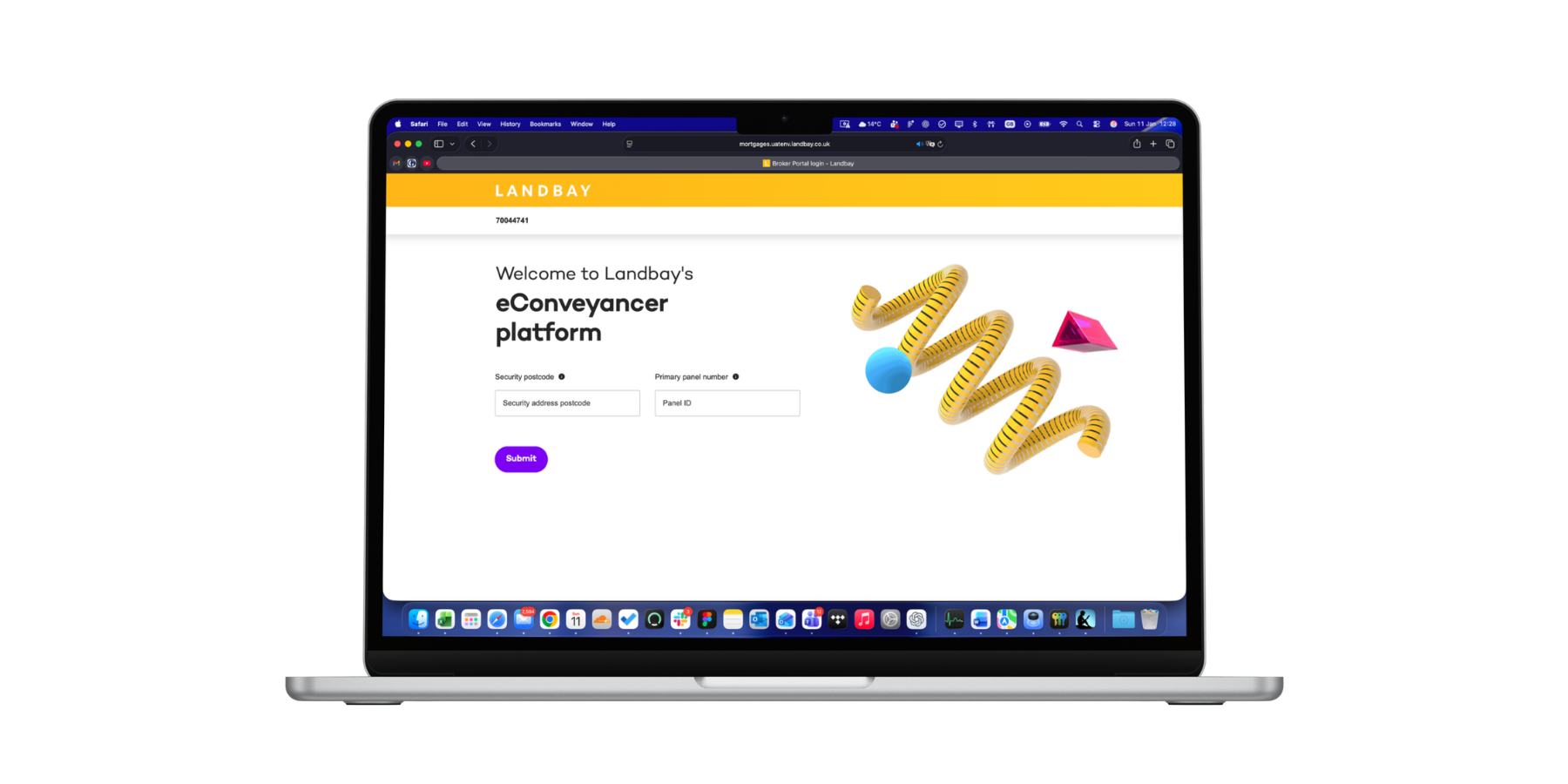
Solicitors strongly preferred not having to create a new username and password — login friction was a barrier to adoption
Solicitors found the checkbox-based condition satisfaction model intuitive and straightforward once explained
Solicitors needed clear visibility of what documents had been uploaded and when
Design Process
Low-Fidelity Prototypes
Early-stage wireframes were used to explore information architecture and workflow structure, focusing on how conditions would be grouped, navigated, and actioned within the solicitor portal.
Mid and High-Fidelity Prototypes
Designs were progressively refined into interactive prototypes, incorporating feedback from internal stakeholders and aligning with Landbay's design system. The high-fidelity prototypes closely reflected the intended production experience.
Usability Testing Sessions
Using working prototypes, I conducted both remote and in-person usability sessions with solicitors to gather first-hand insights into the portal's usability.
Findings led to the following improvements:
Simplified legal copy — condition text was rewritten to be clearer and easier to parse under time pressure
Additional login security — an extra authentication layer was introduced in response to concerns about unauthorised access
Key dates checklist — a milestone checklist was added to give solicitors better visibility of critical deadlines throughout the process
Next Project

Credit Builder | MiBolsillo App